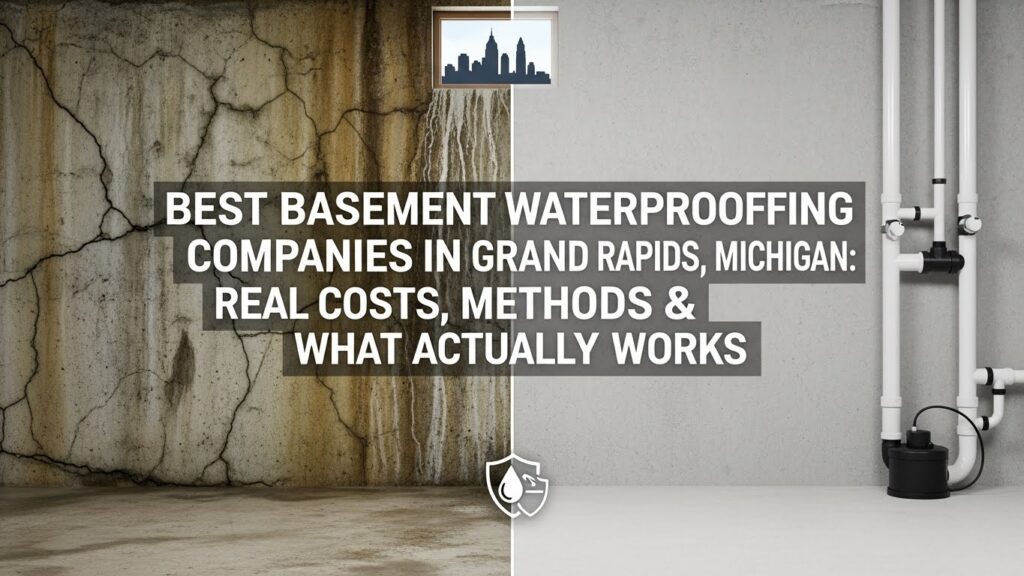
If you’re standing in your Grand Rapids basement watching water seep through foundation cracks or pooling near your furnace, you already know this isn’t something you can ignore much longer. Between West Michigan’s heavy spring rains, snowmelt that saturates clay-heavy soil, and older homes built before modern drainage codes, basement water problems here aren’t rare—they’re practically expected.
The question isn’t whether you need help. It’s who can actually fix it properly, the first time, with a solution that lasts beyond next spring’s thaw.
This guide walks you through how the major basement waterproofing companies operating in Grand Rapids actually approach the problem, what they install, how long their warranties run, and what kind of pricing you’re realistically looking at. You’ll see how EverDry and Basement Systems compare on the systems they use, the problems they solve best, and what homeowners in Kent County typically experience when they hire them.
This isn’t a sales pitch. It’s an honest breakdown designed to help you make a decision that protects your home’s value and keeps your basement dry year-round.
Who This Guide Is For
This guide is for homeowners who:
- Have water actively entering their basement during rain or snowmelt
- Notice musty smells, efflorescence on walls, or early signs of mold
- Are tired of temporary fixes like sealants or dehumidifiers that don’t address the real problem
- Want a permanent solution with a legitimate warranty
- Are comparing multiple contractors and trying to understand what actually works
- Own older homes in neighborhoods like Heritage Hill, East Grand Rapids, or Eastown where foundation issues are common
- Are preparing to finish their basement but need waterproofing done first
This guide is NOT for:
- Homeowners looking for DIY basement sealing kits from hardware stores
- Minor cosmetic crack repairs that don’t involve drainage
- Temporary patch jobs with no long-term warranty
- Situations where you just want the cheapest possible quote regardless of quality
If you’re dealing with recurring water intrusion and want to understand which companies in Grand Rapids can actually solve it, this guide will help.
How Basement Waterproofing Companies Were Evaluated
To compare basement waterproofing companies fairly, I looked at the systems they actually install, not just their marketing. Here’s what mattered in this evaluation:
Waterproofing methodology: Do they install interior drainage systems, perform exterior excavation, or both? What happens to the water once it’s collected?
Drainage system quality: Are they using perforated pipe in gravel, dimpled drainage board, or just surface channels? Is there a sump pump system with battery backup?
Foundation wall treatment: Are they sealing cracks, installing vapor barriers, or redirecting hydrostatic pressure away from the foundation?
Warranty coverage and length: How many years does the warranty run? Does it cover the entire system or just components? Is it transferable if you sell your home?
Inspection and diagnosis process: Do they take time to identify the root cause—grading issues, gutter problems, high water table—or just push a one-size-fits-all solution?
Local experience in Grand Rapids: How long have they been working in West Michigan? Do they understand clay soil, seasonal water tables, and local building codes?
Pricing transparency: Do they provide clear estimates, or is everything vague until they pressure you to sign?
Customer recourse: If something goes wrong, can you actually reach someone, or are you dealing with a national call center?
These criteria help separate companies that install real solutions from those that just sell systems.
Quick Comparison Table
| Company | Waterproofing Method | Warranty Length | Typical Price Range | Best For | Response Time |
| Basement Systems (Ayers) | Interior drainage, sump systems, vapor barriers | Transferable lifetime | $5,000–$15,000+ | Comprehensive interior solutions, finished basements | 1–3 days |
| EverDry Waterproofing | Interior/exterior drainage, crack repair, sump pumps | Lifetime transferable | $4,000–$12,000+ | Homes needing both interior and exterior work | 2–5 days |
| Everdry Michigan | Interior perimeter drains, wall systems | Lifetime (varies by service) | $3,500–$10,000+ | Standard interior drainage projects | 3–7 days |
| Local Foundation Specialists | Custom drainage, grading, sump installation | 10–25 years | $2,500–$8,000 | Smaller jobs, specific problem areas | 1–2 days |
Detailed Breakdown of the Best Basement Waterproofing Companies in Grand Rapids
Basement Systems (Ayers Basement Systems)
Basement Systems is a national network with a local franchise operating as Ayers Basement Systems in Grand Rapids. They’ve been serving West Michigan for over 40 years and are one of the more established names in the region.
What they do well: Ayers specializes in comprehensive interior waterproofing systems. Their WaterGuard drainage system sits along the foundation perimeter and channels water to a sump pump system. They also install vapor barriers, dehumidifiers, and wall finishing systems if you want to refinish your basement after waterproofing.
Types of basement problems they handle: Recurring seepage through foundation walls, hydrostatic pressure issues, flooded basements during heavy rain, older homes with no existing drainage system.
Interior vs exterior approach: Primarily interior-focused. They’ll install perimeter drainage inside the basement, seal cracks from the inside, and manage water that’s already entered the foundation envelope. Exterior excavation is less common in their proposals unless absolutely necessary.
Warranty: Transferable lifetime warranty on their WaterGuard system and sump pumps. This is a strong selling point if you plan to sell your home.
Pros:
- Long local track record in Grand Rapids
- Comprehensive interior systems with integrated components
- Transferable lifetime warranty adds resale value
- Can handle basement finishing after waterproofing
- Free inspections with detailed written estimates
Cons:
- Premium pricing—often the higher end of quotes you’ll receive
- Interior-only approach may not address exterior grading or drainage issues
- National franchise model means less flexibility on pricing
- Some homeowners report aggressive sales tactics during in-home estimates
Best for: Homeowners who want a complete interior solution with strong warranty protection, especially if you’re planning to finish the basement and want everything handled by one contractor.
EverDry Waterproofing
EverDry is a regional basement waterproofing company with locations across the Midwest, including service to the Grand Rapids area. They’ve been in business since 1975 and focus on both interior and exterior waterproofing solutions.
What they do well: EverDry offers more flexibility between interior and exterior methods depending on your specific problem. They’ll excavate and apply exterior waterproofing membranes if that’s what your home needs, or install interior drainage systems if that’s more practical. They also handle foundation crack repair using epoxy or polyurethane injection.
Types of basement problems they handle: Foundation wall cracks, exterior hydrostatic pressure, crawl space moisture, sump pump failures, water entering through floor-wall joints.
Interior vs exterior approach: EverDry is more willing to recommend exterior excavation waterproofing than some competitors. For homes where water intrusion is coming from outside due to poor soil drainage or lack of exterior waterproofing, they’ll dig down to the footer and apply a rubberized membrane or drainage board system. Interior solutions include perimeter drains and sump systems.
Warranty: Lifetime transferable warranty on most waterproofing systems. Specific coverage depends on the type of work performed.
Pros:
- Will recommend exterior solutions when appropriate
- Experienced with older Grand Rapids homes and clay soil issues
- Handles both crawl space and basement waterproofing
- Transferable lifetime warranty
- Can address foundation cracks as part of waterproofing
Cons:
- Exterior excavation work can be significantly more expensive
- Service territory covers a wide area, which can affect scheduling
- Mixed customer reviews on follow-up service after installation
- Warranty claims process can be slower than expected
Best for: Homeowners with exterior drainage problems, foundation cracks that need proper repair, or situations where interior-only solutions won’t solve the root cause.
Everdry Michigan
Everdry Michigan (note the slightly different name) is a local basement waterproofing contractor serving the Greater Grand Rapids area. They’re smaller than the national franchises but have been operating in West Michigan for several decades.
What they do well: Everdry Michigan focuses on interior perimeter drainage systems and basement wall treatments. They’re a more straightforward operation—less upselling on additional products, more focus on solving the immediate water problem.
Types of basement problems they handle: Water seeping through foundation walls, wet basements during spring thaw, sump pump installation and replacement, minor crack sealing.
Interior vs exterior approach: Almost exclusively interior-based. They install perimeter drainage channels along the footer, connect to sump systems, and may apply waterproof coatings to foundation walls. Exterior work is typically referred out to excavation contractors.
Warranty: Lifetime warranty on drainage systems, though specific terms vary by project type.
Pros:
- More affordable than national franchise options
- Local company with direct access to decision-makers
- Straightforward approach without excessive add-ons
- Familiar with Grand Rapids housing stock and common issues
- Faster scheduling for smaller projects
Cons:
- Limited exterior waterproofing capabilities
- Smaller crew availability can delay larger projects
- Warranty enforcement depends on company remaining in business
- Less comprehensive basement finishing services
- May not be ideal for complex foundation problems
Best for: Homeowners with straightforward interior drainage needs, those on tighter budgets, or situations where a simple perimeter system will solve the problem.
Local Foundation and Waterproofing Specialists
Grand Rapids has several smaller foundation repair and waterproofing contractors who handle basement water problems on a custom basis. These aren’t national brands, but experienced local crews who’ve been working in West Michigan for years.
What they do well: Flexibility and customization. They’ll assess your specific situation and design a solution rather than installing the same system in every home. Often better at addressing grading issues, downspout extensions, and exterior drainage that prevents water from reaching your foundation in the first place.
Types of basement problems they handle: Localized leaks, grading and drainage corrections, sump pump installations, targeted crack repair, crawl space moisture control.
Interior vs exterior approach: Varies by contractor. Many will handle both but are more likely to start with exterior corrections (grading, gutters, downspout drainage) before recommending interior systems.
Warranty: Typically 10–25 years depending on the contractor and scope of work. May not be transferable.
Pros:
- Most affordable option for targeted repairs
- Direct communication with the owner/crew
- Willing to fix root causes like grading before selling you interior systems
- Flexible scheduling and faster response times
- Less pressure sales tactics
Cons:
- Shorter warranties than national companies
- No national backing if the company closes
- Limited product lines—may not offer integrated systems
- Smaller crews mean longer timelines for large projects
- Fewer financing options
Best for: Homeowners with specific problem areas, those who want exterior grading fixed first, or anyone looking for a more affordable solution with a contractor they can easily reach.
Our Recommended Basement Waterproofing Partner in Grand Rapids
For most homeowners in Grand Rapids dealing with chronic basement water problems, Ayers Basement Systems offers the most reliable long-term solution, especially if you’re planning to stay in your home or want a warranty that transfers when you sell.
Here’s why: their WaterGuard interior drainage system is specifically designed for Michigan’s clay soil and seasonal water table fluctuations. The system sits along the perimeter of your basement floor, intercepts water before it emerges into your living space, and channels it to a sump pump system with battery backup. The lifetime transferable warranty means if you sell your home in five or ten years, the new owners are still covered—which can be a selling point during negotiations.
Ayers is ideal for homes where:
- Water enters during spring thaw or heavy rain
- You’re planning to finish the basement and need confidence it will stay dry
- Previous DIY or contractor repairs haven’t held up
- You want a warranty that protects your investment long-term
When you contact Ayers, they’ll schedule a free inspection where a specialist assesses your basement, identifies entry points, and provides a written estimate. The inspection typically takes 60–90 minutes. They’ll explain exactly what they recommend and why, including any grading or gutter issues you should address separately.
You’re not obligated to hire them after the inspection, but you’ll have a clear understanding of what a professional interior waterproofing system actually involves.
Disclosure: This recommendation is based on warranty strength, local track record, and system reliability for typical Grand Rapids basement water problems. Homeowners should always get multiple quotes and choose the contractor that best fits their specific situation and budget.
Basement Waterproofing Cost in Grand Rapids
Basement waterproofing costs in Grand Rapids vary significantly based on the scope of work, the size of your basement, and whether you need interior drainage, exterior excavation, or both.
Interior perimeter drainage system: $4,000–$10,000
This includes a drainage channel along the foundation perimeter, connection to a sump pump, and basic vapor barrier or wall sealant. A 1,000-square-foot basement typically falls in the $5,000–$7,000 range.
Sump pump installation with battery backup: $1,500–$3,500
A quality sump pump system with a backup pump and battery system is critical in Grand Rapids where power outages during storms are common. Cheaper systems without backup fail when you need them most.
Exterior excavation and waterproofing: $8,000–$20,000+
Excavating around your foundation, applying waterproof membrane, installing exterior drainage, and backfilling is labor-intensive. Costs depend on how much of the foundation perimeter needs work and accessibility for equipment.
Foundation crack repair (per crack): $500–$1,500
Epoxy or polyurethane injection for structural cracks. Simple cosmetic cracks are cheaper; actively leaking or structural cracks cost more.
Crawl space encapsulation: $3,000–$8,000
Vapor barriers, drainage, and dehumidification for crawl spaces that contribute to basement moisture.
Mold remediation (if needed): $1,500–$5,000+
If water damage has led to mold growth, remediation adds to total cost. Some waterproofing companies include this; others require a separate mold specialist.
Why prices vary:
- Size and layout of your basement
- Severity of water intrusion
- Soil conditions and grading challenges
- Whether exterior excavation is required
- Type of foundation (poured concrete vs block vs stone)
- Accessibility for equipment and crews
What increases cost:
- Finished basements that need demolition first
- Difficult access for excavation equipment
- Multiple foundation cracks requiring repair
- High water table requiring more extensive drainage
- Adding sump pump backup systems or dehumidifiers
What “cheap quotes” often miss:
- No battery backup on sump pumps
- Inadequate drainage stone or improper slope
- No connection to exterior drainage
- Short warranties or no warranty at all
- Temporary fixes instead of addressing root causes
Expect to pay $5,000–$12,000 for a professional interior waterproofing system that actually works long-term in Grand Rapids. Quotes under $3,000 usually indicate shortcuts or incomplete systems. Quotes over $15,000 should include significant exterior work or large basement square footage.
Interior vs Exterior Waterproofing (What Actually Works Long-Term)
The interior-versus-exterior debate is where a lot of confusion happens, and where some contractors push their preferred method regardless of what your home actually needs.
Interior waterproofing manages water after it’s already entered the foundation envelope. A drainage system along the basement perimeter collects water and channels it to a sump pump, which removes it from your home. The system doesn’t stop water from reaching your foundation—it just handles it efficiently once it arrives.
When interior waterproofing works well:
- Older Grand Rapids homes where excavation would damage landscaping or isn’t practical
- Homes with minor to moderate seepage through floor-wall joints
- Situations where exterior access is limited (attached homes, tight lots)
- When the foundation itself is structurally sound
- As a cost-effective solution for managing seasonal water intrusion
When interior-only isn’t enough:
- Active foundation cracks that need exterior sealing
- Severe hydrostatic pressure pushing water through walls
- Homes with no exterior waterproofing membrane (common in pre-1980s construction)
- Chronic moisture that interior drainage hasn’t solved
Exterior waterproofing prevents water from reaching your foundation walls in the first place. Contractors excavate down to the footer, apply a waterproof membrane or coating, install drainage tile that carries water away from the foundation, and backfill with drainage stone.
When exterior waterproofing is necessary:
- Foundation walls are constantly wet, not just during heavy rain
- You’re already excavating for foundation repair
- Clay soil holds water against your foundation
- Poor lot grading directs water toward your home
- You’re building new or doing major renovation
When exterior work is overkill:
- Water intrusion is limited to spring thaw or exceptional storms
- Interior drainage would solve the problem at half the cost
- Excavation would destroy established landscaping, patios, or decks
- Your home is attached or has no exterior access
Why some contractors push one over the other:
- Interior specialists (like Basement Systems franchises) make money on interior systems—that’s their business model
- Excavation contractors prefer exterior work because it’s higher-margin
- Honest contractors should recommend what your home actually needs, not what they prefer to sell
Common failure points:
- Interior systems: Sump pump failure during power outages, improper drainage slope, clogged perimeter channels, no connection to exterior drainage
- Exterior systems: Poor backfill allowing settling, membrane damage during backfill, drainage tile not sloped correctly, no footer drainage connection
For most Grand Rapids homes built before 2000, a properly installed interior drainage system with a reliable sump pump solves 80% of basement water problems. Exterior work becomes necessary when interior solutions haven’t worked or when the foundation itself needs repair.
The key is getting an honest assessment of what your home needs, not what a contractor prefers to sell.
Common Basement Waterproofing Mistakes Homeowners Make
Even with the right contractor, homeowners sometimes make decisions that undermine the effectiveness of waterproofing or cost them more money down the line.
Choosing the lowest quote without understanding what’s included
The cheapest bid often means no battery backup on the sump pump, shorter warranty, lower-quality materials, or a system that doesn’t address the root cause. You’ll end up paying again in three years when it fails.
Ignoring grading and drainage issues outside
If your lot slopes toward your house, gutters overflow, or downspouts dump water next to your foundation, even the best interior system will be overwhelmed. Fix grading and drainage first—it’s often cheaper and reduces the load on your waterproofing system.
Relying on sealants or coatings alone
Waterproof paints and sealants applied to basement walls don’t stop hydrostatic pressure. They might prevent minor dampness, but they won’t handle active water intrusion. You need drainage, not just a coating.
Not verifying the warranty is transferable
If you sell your home in five years, a non-transferable warranty is worthless. Transferable lifetime warranties add real value during home sales and protect the next owner.
Skipping sump pump maintenance
Sump pumps need annual checks. The float switch can stick, debris can clog the intake, and the battery backup needs testing. Ignoring maintenance leads to failure during the next big storm.
Fixing symptoms instead of root causes
Patching cracks without addressing why they formed, installing a dehumidifier without fixing drainage, or sealing one leak while ignoring others just delays the real fix.
Not getting multiple quotes and second opinions
One estimate doesn’t give you perspective on whether the solution is appropriate or the price is fair. Get at least three quotes from different types of contractors.
Delaying repairs until major damage occurs
A small leak becomes mold, which becomes structural damage, which becomes a five-figure problem. The longer you wait, the more expensive and complicated the fix becomes.
What To Do If Your Basement Is Leaking Right Now
If water is actively entering your basement, here’s what to do immediately to minimize damage:
Move anything valuable or electronic off the floor
Get furniture, boxes, electronics, and anything water-sensitive onto shelves or out of the basement entirely.
Identify where water is entering
Look for cracks in walls, gaps where the floor meets the wall, window wells, or water coming up through the floor. Take photos—this helps contractors diagnose the problem later.
Clear floor drains and check sump pump
If you have a floor drain, make sure it’s not clogged. If you have a sump pump, verify it’s running. If it’s not keeping up, you may need immediate pump service.
Use a wet vac or pump for standing water
Don’t let water sit—it accelerates mold growth and damages anything porous. Remove standing water as quickly as possible.
Run dehumidifiers and fans
Once you’ve removed standing water, run dehumidifiers and fans to dry out the space. This slows mold development while you arrange permanent repairs.
What NOT to do:
- Don’t ignore it and hope it stops—water damage compounds quickly
- Don’t try to seal active leaks with caulk or hydraulic cement during flooding—it won’t hold
- Don’t assume it’s a one-time event—recurring leaks indicate a systemic problem
- Don’t wait weeks to call a professional—mold can establish in 48–72 hours
When to call a professional immediately:
- Water is entering through multiple locations
- Your sump pump has failed or isn’t keeping up
- You see water rising through floor cracks
- There’s structural damage or bowing foundation walls
- You smell mold or see visible growth
How fast damage escalates:
- 24–48 hours: Mold spores begin growing on wet surfaces
- 72 hours: Mold becomes visible; drywall and wood absorb moisture
- 1 week: Structural damage begins; flooring and drywall may need replacement
- 2+ weeks: Serious mold growth, potential health risks, major remediation required
The faster you act, the less damage occurs and the lower your total cost. Most waterproofing companies offer emergency service or can schedule inspections within 48 hours.
Frequently Asked Questions
How long does basement waterproofing take?
Interior perimeter drainage systems typically take 2–4 days for an average basement, depending on size and complexity. Exterior excavation work takes 5–10 days due to digging, membrane application, and backfilling. Simple crack repairs or sump pump installations can be done in one day.
Will waterproofing stop mold growth?
Waterproofing prevents new moisture from entering, which stops new mold growth. However, existing mold must be remediated separately. Most waterproofing contractors can recommend mold specialists or include remediation in their proposal if needed.
Are permits required for basement waterproofing in Grand Rapids?
Interior drainage systems and sump pump installations typically don’t require permits. Exterior excavation work may require a permit depending on scope and proximity to property lines. Reputable contractors handle permit applications if needed.
Does homeowner’s insurance cover basement flooding?
Standard homeowner’s insurance usually doesn’t cover groundwater flooding or seepage. Sewer backup coverage is available as an add-on, and flood insurance through FEMA covers specific flood zones. Check your policy before assuming coverage. Most basement water damage is considered a maintenance issue.
Do warranties transfer to new homeowners?
This depends entirely on the company and the specific warranty. Basement Systems and EverDry typically offer transferable lifetime warranties, which can be a selling point. Local contractors may offer non-transferable warranties. Always verify this in writing before signing a contract.
Can I finish my basement after waterproofing?
Yes, and you should waterproof before finishing. Installing drainage systems after drywall and flooring are in place requires demolition, which significantly increases cost. Most waterproofing companies can coordinate with basement finishing contractors or offer finishing services themselves.
What happens if the waterproofing system fails?
Reputable companies with lifetime warranties will return to diagnose and fix failures at no cost if the system was installed correctly and maintained properly. Keep documentation of annual sump pump maintenance and any service calls. Warranty work typically happens within a few days of reporting an issue.
How do I maintain my basement waterproofing system?
Test your sump pump quarterly by pouring water into the pit to verify it activates. Check and clean the sump pit annually. Inspect perimeter drainage channels for debris. Test battery backup systems twice a year. Keep gutters clean and downspouts extended away from the foundation.
Final Verdict & Next Steps
Basement water problems in Grand Rapids don’t fix themselves, and temporary patches rarely hold up through Michigan’s freeze-thaw cycles and spring runoff. The companies covered in this guide—Basement Systems (Ayers), EverDry, Everdry Michigan, and local specialists—all offer legitimate solutions, but the right choice depends on your specific situation, budget, and how long you plan to stay in your home.
If you want comprehensive interior waterproofing with a strong warranty and you’re willing to pay for that peace of mind, Ayers Basement Systems is the most reliable option. If your home needs exterior excavation work or foundation crack repair, EverDry has more experience with those approaches. If you’re working with a tighter budget and have a straightforward drainage problem, Everdry Michigan or a local specialist can deliver effective results.
The most important step is getting multiple inspections and quotes so you understand what your home actually needs—not just what a contractor wants to sell you. Look for companies that explain the root cause of your water problem, not just the symptoms. Ask about warranty terms, what happens if the system fails, and whether the warranty transfers if you sell.
Basement waterproofing done right is an investment that protects your home’s value, prevents costly mold and structural damage, and gives you confidence that your basement will stay dry year-round. Waiting until water damage becomes severe only makes the fix more expensive and more complicated.
If your basement is leaking now or you’ve dealt with recurring moisture issues, schedule inspections with at least two contractors this week. The problem won’t improve on its own, and the earlier you address it, the more options you have and the less you’ll ultimately spend.